
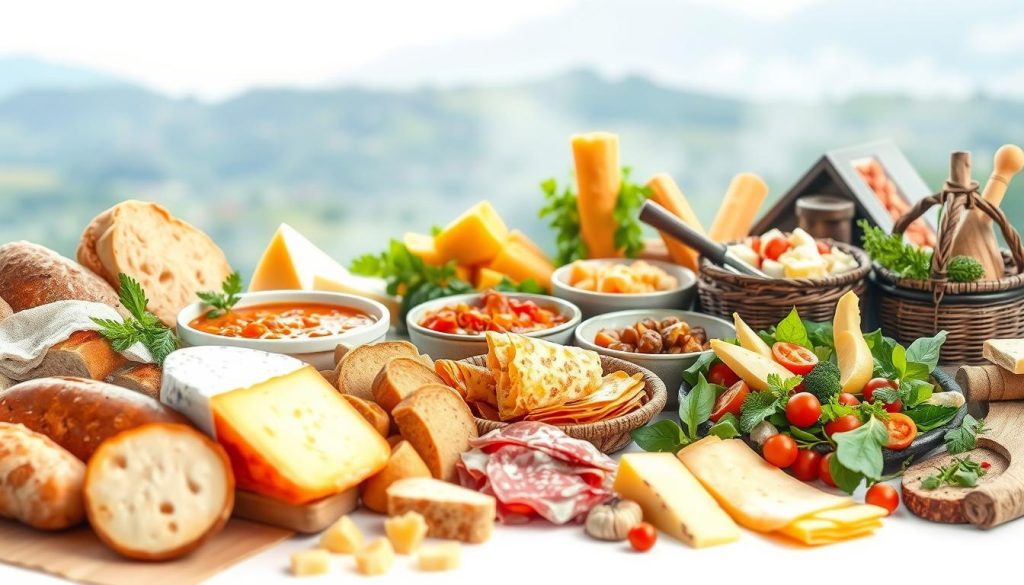
European food shows the rich culture of the continent. Each country has its own special dishes. These dishes bring people together, sharing the joy of food.
From the Mediterranean to the Nordic regions, every country has its own taste. This taste is shaped by history, geography, and traditions.
The variety in traditional European cuisine is amazing. Each dish tells a story of its region’s history and culture. The dining experience is about more than just food.
It’s about the people, places, and traditions that make it special. Let’s explore the best dishes from every country. We’ll see what makes European food so unique and important.
Understanding European Food Culture and Traditions

European food culture is rich and varied. It’s shaped by history, geography, and tradition. To really get it, we must look at how European cuisine evolved. This evolution was influenced by different regions and the changing seasons.
Authentic European food is more than just food. It shows off cultural heritage and community spirit. Each dish has its own story, reflecting the region’s history, climate, and values.
Exploring these dishes helps us understand their cultural background. This way, we can see how food brings people together. It creates a sense of belonging and identity.
- Seasonal ingredients, making dishes fresh and tasty
- Traditional cooking methods, like roasting and stewing, passed down through generations
- Regional specialties, like pasta in Italy and tapas in Spain, showing the variety of European food culture
By diving into the diversity of European dishes, we appreciate Europe’s cultural heritage. We see the importance of authentic European food in our lives.
Mediterranean Culinary Treasures: Southern European Specialties
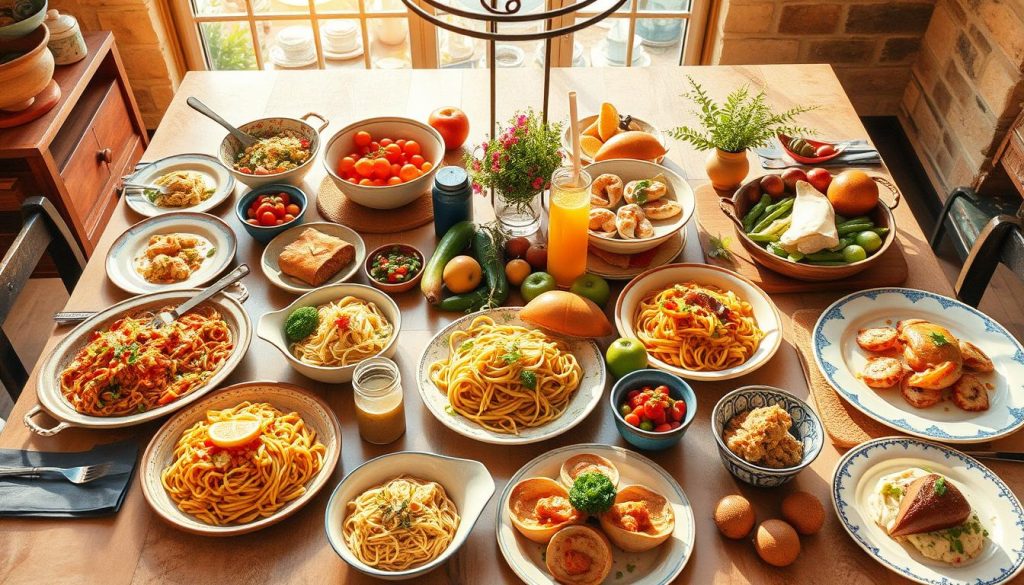
Southern Europe is famous for its rich food culture. Restaurants here serve a wide variety of tasty dishes. From the Mediterranean coast to Italy’s hills, you’ll find amazing food. Try paella, risotto, and gyro to taste the region’s unique flavors.
What makes these restaurants great? They use fresh, local ingredients and traditional cooking. They also know a lot about the area’s food history. This mix creates unforgettable meals that highlight southern European cuisine.
Looking to try southern Europe’s food? Italy, Spain, and Greece are top choices. Each place offers something special. Whether you want pasta, seafood paella, or a gyro, you’ll find it here. Southern Europe is a paradise for food lovers.
The Hearty Flavors of Eastern European Cuisine
Eastern European food is known for its rich flavors. It uses healthy ingredients like vegetables, whole grains, and lean meats. Traditional cooking methods, like slow-cooking stews, are a big part of its heritage.
Eastern European dishes often feature unique ingredients and spices. These add depth and warmth to the food. You’ll find sauerkraut, pierogies, and goulash in many traditional recipes.
Traditional Cooking Methods
Eastern European cooking often involves slow-cooking, braising, and stewing. These methods blend the flavors of ingredients, making dishes hearty and comforting.
Signature Ingredients and Spices
Paprika, caraway seeds, and dill are key ingredients in Eastern European cuisine. They give dishes a unique flavor and aroma, setting them apart from other healthy options.
Famous Comfort Foods
Eastern European cuisine is known for its comfort foods. Dishes like beef stroganoff, chicken paprikash, and pierogies are favorites. They’re often served at festivals and are a big part of the region’s culinary heritage.
Western European Food: A Blend of Sophistication and Tradition
Western European cuisine is known for its mix of elegance and tradition. It shows the area’s deep food culture. From fancy restaurants to laid-back spots, the variety of Western European food highlights the region’s cooking skills.
Food festivals across Europe celebrate this rich culture. They bring together chefs and food lovers to share their love for food. These events help people understand different cultures and let Western European food stand out.
- Emphasis on seasonal ingredients and local produce
- Innovative cooking techniques and presentation styles
- Rich culinary traditions and historical influences
These elements make Western European food special. It’s a key part of European food culture and a favorite at international food festivals.
Nordic Cuisine: Exploring Scandinavian Delicacies
Nordic cuisine is known for its unique and flavorful dishes. These dishes are made with locally sourced ingredients. Many traditional dishes are still enjoyed today, thanks to authentic European recipes.
These recipes often feature seafood, meat, and vegetables. They are combined to create hearty and comforting meals.
Some popular dishes include smörgåsbord, a Swedish buffet, and kælderkål, a Danish dish with cabbage and pork. These dishes highlight the region’s focus on local ingredients and traditional cooking.
Preservation Techniques
Traditional preservation techniques are still used in Nordic cuisine. They allow for the enjoyment of seasonal ingredients all year. Some common techniques include:
- Pickling: used to preserve vegetables and fruits
- Smoking: used to preserve meats and fish
- Curing: used to preserve meats and fish
Seasonal Ingredients
Seasonal ingredients are a key part of Nordic cuisine. Many dishes feature ingredients only available during certain times. Some popular seasonal ingredients include:
- Wild mushrooms: available in the fall
- Seafood: available year-round, but often at its peak in the summer
- Game meats: available in the fall and winter
Essential Ingredients in Traditional European Dishes
Exploring European dinner ideas means knowing the key ingredients. These ingredients are the base of traditional European dishes. They can be mixed in many ways to make tasty and simple meals. Common ingredients include olive oil, garlic, and herbs like thyme and rosemary.
Using fresh, seasonal ingredients is crucial in European cooking. This method makes dishes not only tasty but also healthy. Adding easy-to-make European recipes to your meals lets you enjoy Europe’s flavors without hassle. Some must-have ingredients are:
- Fresh vegetables like tomatoes, bell peppers, and onions
- Proteins such as chicken, beef, and fish
- Grains like pasta, rice, and bread
- Dairy products, including cheese and yogurt
Learning to mix these ingredients can lead to a variety of delicious dishes. Whether you want a hearty stew or a fresh salad, you can make it with ease. This way, you can have a memorable dining experience.
Cultural Significance of European Food Festivals
European food festivals are a big part of the continent’s culture. They show off the variety and richness of its food. These events celebrate real European dishes, focusing on healthy recipes and old cooking ways.
A good plan for eating is key to enjoy these festivals. It helps you taste and understand the food better.
At the core of these festivals are the people, their traditions, and their love for food. They bring communities together, creating a sense of belonging and cultural identity. From Spanish tapas to Italian pasta, each festival offers a special taste experience. Healthy recipes let visitors enjoy tasty and good-for-you food, making the festivals unforgettable.
- Tomatina in Spain, where participants throw tomatoes at each other
- Carnevale di Venezia in Italy, featuring elaborate masks and costumes
- Oktoberfest in Germany, a celebration of beer and traditional german cuisine
These festivals show the importance of European food festivals. They highlight the continent’s rich food heritage and people’s love for real European dishes.
Modern Interpretations of Classic European Recipes
European food recipes have changed a lot lately. Now, we see new takes on old favorites. Think Italian pasta and French bouillabaisse, but with a twist. These dishes now include fresh ingredients and new cooking methods, making them both exciting and tasty.
Here are some examples of these modern twists:
- Deconstructed dishes, like a traditional english breakfast turned into a breakfast burrito
- Fusion cuisine, mixing European recipes with flavors from around the world
- Vegetarian and vegan versions of classic dishes, like vegan lasagna
These updates have made traditional European recipes more appealing to everyone. Chefs and home cooks can now create dishes that are both innovative and true to their roots. This way, they honor the classic recipes while adding their own flair.
In short, these new takes on classic European recipes keep the tradition alive and fresh. They bring in new tastes and ingredients, making European food exciting for everyone. Whether you love traditional dishes or want to try something new, now is a great time to dive into European recipes.
Health Benefits of Traditional European Cuisine
Traditional European cuisine is not just tasty, but also good for your health. It focuses on fresh, seasonal ingredients and balanced meals. The Mediterranean diet, a big part of European cuisine, helps lower heart disease and cancer risks.
European cuisine restaurants serve dishes full of fruits, veggies, whole grains, and lean proteins. This makes them perfect for healthy meals. Recipes often use olive oil, garlic, and herbs, which are great for your health. Adding these to your diet can make your meals healthier and more balanced.
- Reduced risk of heart disease
- Lower risk of certain types of cancer
- Improved digestion
- Boosted immune system
Adding healthy European food options to your diet can bring these benefits to you. Whether you cook at home or eat out at European restaurants, there are many choices.
Conclusion: Embracing the Rich Tapestry of European Culinary Heritage
Our journey through European food shows the continent’s rich culinary history. It’s a mix of tradition, innovation, and cultural exchange. Each region brings its own flavors and cooking styles to the table.
It’s important to keep and share this European dining experience. It’s not just about the food, but also about the cultures that have shaped it. By exploring both old and new European recipes, we truly appreciate the diversity of European cuisine.